
Creatine - What It Does, How to Take It, and Is It Safe?
Creatine is one of the most researched supplements in existence, and for once the evidence mostly lives up to the reputation. If you want to know what creatine actually does, how much to take, whether it is safe, and who it genuinely helps, this article covers all of it without the gym-bro hype.
The short version: creatine works. The strongest evidence is for strength, power, and high-intensity exercise. It is safe for healthy adults at standard doses. The main side effect is a small amount of weight gain from water retention, not fat. The kidney-damage fear is not supported by the evidence for healthy people. And it is not just for bodybuilders.
What Is Creatine?
Creatine is a compound your body makes naturally in the liver and kidneys from the amino acids glycine, arginine, and methionine. You also get small amounts from meat and fish, about 1 to 2 grams per day from a typical omnivore diet. Your muscles store the majority of your body's creatine, mainly as phosphocreatine (PCr), with smaller amounts in the brain and other tissues.
If you eat little to no meat, as vegetarians and vegans typically do, your baseline muscle creatine stores tend to sit lower than average. That detail matters when we talk about who responds best to supplementation.
Creatine has been a mainstream sports supplement since the 1990s and is one of the most studied ergogenic aids (performance-supporting substances) in sports science. It is not a steroid and not a hormone. It is closer in structure to an amino acid than to any drug.
What Does Creatine Do in Your Body?
Your muscles run on a molecule called ATP (adenosine triphosphate), the body's energy currency. The problem is that your muscles only store enough ATP for a few seconds of hard effort, so once that runs out you need to regenerate it quickly.
That is where phosphocreatine comes in. When ATP breaks down during intense exercise, phosphocreatine donates a phosphate group to rebuild it almost instantly. The chain looks like this: you sprint or lift, ATP breaks down into ADP (adenosine diphosphate), PCr steps in and hands over its phosphate, and ATP is restored so the effort can continue.
Supplementing with creatine raises your muscle phosphocreatine stores by roughly 20 to 40% above normal. More stores means more fuel for that rapid ATP recycling system. Research also suggests creatine may help blunt the buildup of lactic acid and support glycogen (stored carbohydrate) storage in muscle, though those are secondary mechanisms.
The core benefit is straightforward: more creatine in your muscles means more raw fuel for short, intense bursts of effort.
What Does Creatine Actually Do for You?
The exercise and performance evidence is where the science is strongest. It is worth being specific about what that evidence shows, because the benefit is real but not uniform across every measure.
A 2025 systematic review and meta-analysis by Kazeminasab et al. (Nutrients) pooled 69 studies and nearly 2,000 participants. Creatine combined with resistance training produced small but statistically significant improvements in the big compound lifts, bench/chest press and squat, plus muscular power measures like vertical jump and Wingate peak power. It did not find a significant effect for handgrip or leg press strength, and the authors were clear that the effects are not uniform across all measures. The NIH Office of Dietary Supplements, reviewing the broader body of evidence, reaches the same general conclusion: creatine improves performance in high-intensity, short-duration, intermittent exercise, especially alongside training.
As a concrete example, one study in the NIH review found that female collegiate soccer players who took 15 g/day for one week followed by 5 g/day for 12 weeks gained more strength than a placebo group doing the same training. The supplement did not replace the training. It made the training produce bigger results.
The effect extends beyond lifting to any activity with repeated short, high-intensity bursts, such as sprinting, jumping, cycling intervals, soccer, or basketball. The honest summary: creatine may enhance high-intensity, short-duration, intermittent performance, with the most reliable strength gains showing up in major compound lifts rather than every possible measure.
Is Creatine Only for Lifters?
It is not, but it does have a specific profile of who it helps. Creatine works for activities that rely on the phosphocreatine energy system: efforts lasting roughly 10 seconds to 2 minutes, done repeatedly with rest in between, like a set of squats, a 100-meter sprint, a basketball possession, or a high-intensity interval.
What it does not do well is improve steady-state endurance. Distance running, long cycling, and lap swimming mostly rely on aerobic metabolism, which creatine does not meaningfully support. The NIH notes that creatine has little value for endurance performance, and the initial weight gain from water retention can actually be a disadvantage in weight-bearing endurance sports.
If you are training for a marathon, creatine is probably not your tool. If you are doing strength training, interval training, or a team sport that pairs explosive effort with recovery, it likely is.
Does Creatine Monohydrate Beat Other Forms?
Walk into any supplement store and you will see creatine in a dozen forms: creatine ethyl ester, creatine HCL, buffered creatine (Kre-Alkalyn), creatine alpha-ketoglutarate, and more. The marketing often suggests they are better absorbed or easier on the stomach, but the evidence does not support that.
Creatine monohydrate is 88% creatine by weight and has been studied longer and more thoroughly than any other form. According to both the NIH and the International Society of Sports Nutrition (ISSN), the pricier alternatives have not proven superior to monohydrate in uptake, digestibility, stability, or safety, and some have not been tested nearly as much. Micronized creatine monohydrate, where the powder particles are smaller, tends to mix more easily in water, which some people prefer, but the underlying compound is the same.
The practical takeaway: buy monohydrate. It is the most studied, most affordable, and most reliable form, and there is no established reason to pay more for a fancier version. This connects to a broader principle worth applying to any supplement, whether whey protein or magnesium: the best-studied form is usually the one worth taking.
How Much Creatine Should You Take, and How?
There are two common approaches.
Loading protocol: Take 20 g per day, split into four 5 g doses, for 5 to 7 days. This saturates your muscle creatine stores quickly. After the loading phase, drop to a maintenance dose of 3 to 5 g per day. A weight-based loading dose is also used: 0.3 g per kilogram of body weight per day, which is about 22.5 g/day for a 75 kg (165 lb) person, split across the day.
No-load protocol: Skip the loading phase and take 3 to 6 g per day. Your stores will still saturate, it just takes 3 to 4 weeks instead of one. This approach is simpler, uses less total product, and causes less stomach discomfort for people sensitive to larger doses.
Both approaches work. Loading reaches full saturation faster, which may matter if you have a competition coming up. One practical note: mixing creatine with carbohydrates, like fruit juice, may help with uptake, because insulin helps shuttle creatine into muscle cells. It is not required, but it is a common approach.
When Should You Take Creatine?
Timing barely matters, as long as you take it every day. Creatine's benefit comes from saturating your muscle stores over time, not from a peak in your bloodstream at any specific moment. Unlike caffeine or a pre-workout stimulant, there is no meaningful window where taking creatine does more for you than if you took it an hour later.
Some research hints that taking creatine close to exercise may have a slight edge over a random time of day, but the effect is small and the data are not definitive. What the data are clear on is that regularly missing doses undermines the whole strategy. Pick a time you will remember, with breakfast, post-workout, or before bed, and stick to it.
Side Effects and Safety: What's Real and What's a Myth
Creatine has three persistent myths around it. Here is what the evidence actually says.
Myth 1: Creatine damages your kidneys. Creatine is metabolized into creatinine, a waste product the kidneys filter and excrete. Supplementation does raise creatinine levels in blood tests, which can look alarming, but elevated creatinine from creatine supplementation reflects increased production of a normal waste product, not kidney damage. The ISSN's position statement concludes that up to 30 g/day for up to 5 years is safe and well-tolerated in healthy people, including patient groups ranging from infants to the elderly. That said, if you already have kidney disease, reduced kidney function, or other conditions that affect the kidneys, speak with your doctor before supplementing. That caution is real.
Myth 2: Creatine causes muscle cramps and dehydration. Research does not support this. The ISSN notes that creatine does not increase cramping or dehydration risk, and some studies actually show a reduced incidence of cramps, dehydration, and musculoskeletal injury in people who supplement. The cramping concern is largely anecdotal.
Myth 3: Creatine makes you fat. Creatine is not stored as fat. The weight gain you will see, typically 1 to 2 kg in the first month, is mostly water retention, because creatine draws water into muscle cells. Some additional weight may come from increased muscle tissue if you are training hard. Neither is fat, and the water weight reverses within a couple of weeks if you stop.
Real side effects worth knowing: some people experience nausea or stomach discomfort, especially at the higher doses of a loading phase. Splitting the dose across the day, four 5 g servings rather than one 20 g serving, usually resolves it. Anecdotal reports of cramps, stiffness, and heat intolerance exist but are not well-supported in controlled studies.
Who Benefits Most from Creatine?
Not everyone responds equally, and the most recent evidence suggests the benefit is more consistent in some groups than others.
People doing resistance training or high-intensity exercise. This is the core use case, and creatine's benefits are strongly tied to it. It makes hard training produce more results. If you are looking for a structured place to start, see our guide to strength training after 50 for a practical framework.
Vegetarians and vegans. Because plant-based diets contain little to no creatine, these individuals tend to have lower baseline muscle creatine stores, which leaves more room for supplementation to make a difference. Research confirms they often see a larger response than meat-eaters.
Younger trained adults and men. In the 2025 Kazeminasab meta-analysis, the strength and power benefits were most consistent in younger adults and in men. That is not a reason for anyone else to skip creatine. It simply reflects where the current evidence is strongest.
Older adults. The evidence here is mixed but leans positive. The ISSN cites meta-analyses of older adults in which creatine plus resistance training produced greater gains in muscle mass, strength, and functional capacity. However, the 2025 strength/power meta-analysis found smaller or non-significant strength changes in older adults for several measures and called for more well-powered trials in this group. The reasonable read: creatine is worth considering alongside resistance training for healthy aging, but the results are not guaranteed.
Women. Women have historically been underrepresented in creatine research, and the picture is still developing. Some evidence points to benefits for strength and body composition, but the 2025 meta-analysis found smaller or non-significant strength changes in women across several measures and explicitly called for more research. There is growing interest in creatine for peri- and post-menopausal women, but the women-specific evidence is better described as promising than settled.
Does Creatine Help Your Brain?
Claims about creatine improving memory, focus, and processing speed are circulating widely right now. Some of this is genuinely interesting research, but it is early, and one key study in this area is actively disputed.
Here is what is known. The brain uses ATP too, and some researchers have hypothesized that raising brain creatine stores could support cognitive function, especially under stress, sleep deprivation, or aging. Some individual trials have found promising signals.
A 2024 meta-analysis by Xu et al. (Frontiers in Nutrition) suggested benefits for memory and cognitive performance in adults. However, that paper has a 2025 corrigendum, a published commentary raising methodological concerns, and an EFSA (European Food Safety Authority) opinion, all flagging a potential double-counting error in the statistics that may have produced false-positive findings. EFSA declined to approve a creatine-cognition health claim.
Cognitive benefits from creatine are possible and worth watching as the research matures, but they are not established. Taking creatine primarily for brain health is not well-supported by the current evidence. Taking it because you train is. The exercise evidence is solid; the cognition evidence needs more work.
Recommended Products
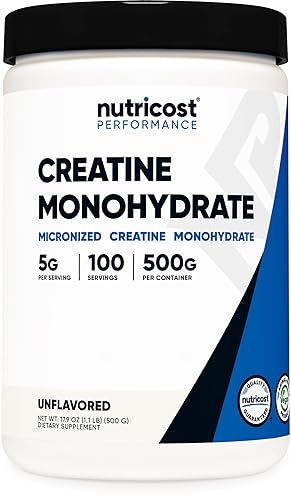
Nutricost Creatine Monohydrate Micronized Powder, Unflavored, 500 g (100 servings)

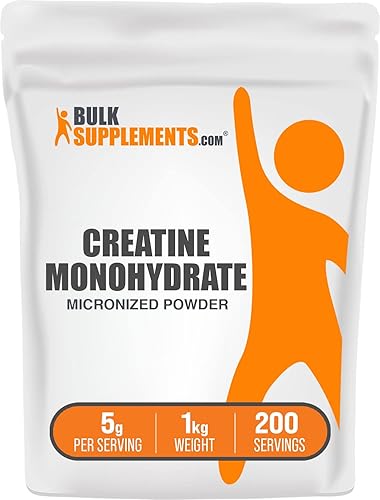
BulkSupplements.com Creatine Monohydrate Powder, Unflavored, 1 kg (200 servings)

Frequently Asked Questions
Does creatine work without exercising?
Creatine's documented benefits are closely tied to training. It supports the energy system that powers high-intensity exercise, and the strength and muscle gains in the research come from studies where participants were also training. Taking it without exercising is unlikely to produce meaningful results, and the water-retention weight gain would just be that: water weight.
How long does it take creatine to work?
With a loading protocol (20 g/day for 5 to 7 days), your muscles can reach saturation within a week. Without loading, expect 3 to 4 weeks of consistent daily dosing. Most people notice performance changes, slightly more reps or better output on a set, once stores are saturated.
Can women take creatine?
Yes, it is safe for women. How much it boosts strength is less settled than in men: women have been underrepresented in the research, and the most recent meta-analysis found smaller or non-significant strength changes in women across several measures and called for more study. Interest in creatine for older and menopausal women is growing, but the women-specific evidence is still developing.
Is creatine safe long-term?
For healthy adults, the current evidence says yes. The ISSN concludes that up to 30 g/day for up to 5 years is safe and well-tolerated. People with kidney disease or risk factors for kidney problems should check with a clinician first.
Do I need to cycle creatine on and off?
No. There is no research-supported reason to cycle creatine. Daily consistent use is the whole strategy. Some people take breaks for practical reasons like travel or cost, but there is no known harm in continuous use at standard doses.
In Summary
Creatine is not a magic powder, but it is one of the few supplements that has genuinely earned its reputation. The evidence for strength, power, and high-intensity performance is strong, if not perfectly uniform across every measure. It is safe at standard doses for healthy adults. The kidney myth is just that, a myth, though a real caution exists for people with kidney disease. The weight gain is water, not fat.
If you lift weights, play a sport that involves bursts of effort, or are an older adult trying to maintain muscle, creatine monohydrate is worth serious consideration. Start with 3 to 5 g per day, skip loading unless you want faster results, pick a time you will remember, and take it daily.
If you are thinking about other foundational supplements, it is worth reading about whey protein, vitamin D, and magnesium too, since each has a different evidence profile and a different use case.
References
NIH Office of Dietary Supplements. Dietary Supplements for Exercise and Athletic Performance, Health Professional Fact Sheet. View Source
Kreider RB, et al. (2017). ISSN position stand: safety and efficacy of creatine supplementation in exercise, sport, and medicine. Journal of the International Society of Sports Nutrition 14:18. View Source
Kazeminasab F, et al. (2025). The effects of creatine supplementation on upper- and lower-body strength and power: a systematic review and meta-analysis. Nutrients 17(17):2748. View Source
Xu C, et al. (2024). The effects of creatine supplementation on cognitive function in adults: a systematic review and meta-analysis. Frontiers in Nutrition 11:1424972. [Note: this paper has a 2025 corrigendum and is the subject of a published commentary and an EFSA opinion raising statistical concerns; findings should be treated as preliminary and contested.] View Source
Keep reading
More in Supplement →


Medical Disclaimer: This article is for informational purposes only and is not intended as medical advice. Always consult with a qualified healthcare provider before starting any supplement regimen. The studies referenced are for educational purposes and individual results may vary.