
Whey Protein - What It Is, What It Does, and How to Use It
Whey protein is the best-selling protein supplement in the world, and the marketing around it is loud. Some of that holds up. Some of it is overstated. The honest version is more useful than the hype.
Here's the short version. Whey is a high-quality, fast-digesting milk protein that is rich in the amino acids your muscles use to repair and grow. Paired with resistance training and an adequate overall diet, it can help you build and maintain muscle. On its own, with no training and no protein gap to fill, it is not magic. This article walks through what whey actually is, the three types you'll see on the shelf, what the research supports, how much protein you really need, and how to use it safely.
What Is Whey Protein?
Whey is one of the two proteins in milk, and it is a byproduct of cheesemaking. When milk is processed, it separates into curds and a liquid, and that liquid is whey. Dried and concentrated, it becomes the protein powder you buy at the store. It shows up not just in tubs of powder but in protein bars, gels, and ready-to-drink shakes.
What makes whey useful is its amino acid profile. It is a complete protein, meaning it contains all of the essential amino acids your body cannot make on its own, and it is especially rich in leucine. Leucine is the amino acid that acts as the primary trigger for muscle protein synthesis, the process your body uses to build and repair muscle tissue. Whey also digests quickly, so those amino acids show up in your bloodstream fast, which is part of why it became the default post-workout protein.
One practical note worth knowing as a shopper: depending on the product, whey may be sold as a conventional food, with a Nutrition Facts panel, or as a dietary supplement, with a Supplement Facts panel. Either way, the number that matters most is the grams of protein per serving, which for most products lands between 20 and 30 grams per scoop.
What Are the Three Types of Whey Protein?
Walk down a supplement aisle and you'll see three versions of whey. They differ mainly in how much they have been filtered.
Whey protein concentrate: The least processed form. It is the most common and usually the most affordable, and it retains more of the natural fat and carbohydrate from milk, which means a bit more lactose.
Whey protein isolate: Filtered further to strip out most of the fat and lactose, so it has a higher protein concentration per scoop and is lower in lactose. A reasonable choice for people who are sensitive to lactose or who want the leanest possible protein per serving.
Whey protein hydrolysate: Partially broken down, or pre-digested, so it absorbs especially quickly. It is typically the most expensive of the three.
The differences between these forms are smaller than the marketing suggests. Isolate does deliver more protein and less lactose per gram than concentrate, but for most people choosing a daily protein powder, the practical gap is modest. The concentrate vs. isolate comparison deserves its own deeper look, which we will cover in a dedicated guide.
Does Whey Protein Actually Work?
The evidence is real, but narrower than the marketing implies. Whey protein has been shown to increase muscle protein synthesis and to support recovery and exercise performance. The mechanism is straightforward: whey delivers a fast, leucine-rich dose of essential amino acids that activates the mTOR pathway, the cellular signal that drives muscle building after a workout. You train, your muscles are primed to respond, leucine arrives quickly, mTOR activates, and your body begins building new muscle tissue. Remove any link in that chain and the effect shrinks.
The strongest, most consistent finding here is not really about whey specifically. It is about protein plus training. A 2025 network meta-analysis pooled 19 randomized controlled trials in nearly 1,000 healthy older adults and compared protein, creatine, and HMB supplements alongside resistance training. Protein supplementation combined with resistance training significantly improved both muscle strength and muscle mass compared with training alone. Creatine produced the largest gains in muscle mass, while HMB did not show a significant benefit for either outcome. When adequate protein is paired with a real training program, you get more out of that training, and whey is a convenient, high-quality way to supply that protein.
Two honest caveats keep this in perspective. Whey has not been clearly shown to be superior to other high-quality protein sources such as beef, eggs, or protein blends. And protein without a resistance-training stimulus does not build strength on its own. The supplement supports the work; it does not replace it.
How Does Whey Protein Work in Your Body?
Leucine is the key. Here is the step-by-step chain.
You finish a workout. Your muscle fibers have been stressed and need repair. You drink a whey shake. Because whey is fast-digesting, a concentrated dose of amino acids, especially leucine, reaches your bloodstream relatively quickly. That leucine signals the mTOR pathway, essentially your muscle-building switch. mTOR triggers muscle protein synthesis, the process of assembling new muscle proteins. Done consistently over weeks and months, the result is muscle that is repaired, rebuilt slightly stronger, and better protected against breakdown.
This is why the mechanism matters most when two things line up: there is a training stimulus to respond to, and enough leucine arrives to actually activate the process. That is why whey's fast digestion and high leucine content made it the go-to post-workout choice. It hits at the right time with the right signal.
This is also why whole-food protein sources like chicken, eggs, and Greek yogurt do much of the same job. They deliver leucine and essential amino acids too, just at a slower rate. Whey's edge is speed and convenience, not a fundamentally different biology.
How Much Protein Do You Need, and Where Does Whey Fit?
Whey is a tool for hitting a protein target, so the real question is what that target should be. For generally less active adults, protein needs are modest and close to standard dietary guidelines. For people who are active or training, the needs are higher. The NIH Office of Dietary Supplements puts the range for athletes at roughly 0.55 to 0.9 grams of protein per pound of body weight per day, or about 1.2 to 2.0 grams per kilogram. The right amount depends on your age, activity level, total calories, and goals, so there is no single number that fits everyone.
This is where whey earns its place. If you are aiming for 1.6 grams per kilogram and consistently falling short from food alone, a 20-to-30-gram scoop is a simple, fast way to close that gap. But if you are already hitting your protein target from meals, adding whey on top is unlikely to produce extra results. It is a gap-filler, not a multiplier.
A practical way to think about it: build your protein around whole foods like lean meats, fish, low-fat dairy, eggs, legumes, nuts, and seeds, spread across your meals. Then use whey when whole food is inconvenient or you are coming up short. Whole foods bring along vitamins and minerals that work alongside protein, which a scoop of powder does not fully replicate. If you are working on getting more micronutrients alongside your protein, it is worth thinking about how to get more magnesium in your diet. Magnesium plays a role in muscle function and is easy to miss from diet alone.
How and When Should You Take Whey Protein?
The most useful time to reach for whey is simply when whole-food protein is inconvenient or unavailable. A scoop after a workout, a shake on a rushed morning, or a serving stirred into oats or yogurt to push a low-protein meal higher are all sensible uses.
The post-workout shake is the classic move, and it is a fine habit. Whey digests quickly and supplies leucine right when your muscles are primed to use it. That said, the bigger lever for building muscle is your total daily protein and your training consistency, not the precise minute you drink your shake. Hitting your daily target matters more than nailing a narrow post-workout window.
For older adults especially, getting enough high-quality protein alongside regular resistance training is worth the effort. Age-related muscle loss is exactly what that combination helps counter. If that is your situation, pairing whey with a structured strength routine makes real practical sense. You can find a good starting framework in our guide to strength training for weight loss after 50.
Who Should Consider Whey, and Who Should Be Cautious?
Whey is a good fit for a few clear groups: people who train and struggle to meet their protein needs from food alone, busy people who want a convenient protein source, and older adults working to preserve muscle and strength.
Some groups should be more careful. Because whey comes from milk, anyone with a milk allergy or a meaningful sensitivity may react to it and should consider a plant-based protein source instead. People with pre-existing kidney or liver conditions should be cautious with high protein intakes and check with a healthcare provider before adding a supplement, since concentrated protein can place extra demand on those systems when they are already impaired.
For most healthy adults, none of this is a barrier. It is simply a reason to be sensible about dose and to choose a product that suits your digestion.
What Are the Side Effects of Whey Protein? Is It Safe?
For healthy adults, whey protein is generally well tolerated in doses up to about 40 grams a day. The most common side effects are digestive: gas, bloating, diarrhea, and general stomach discomfort. Some people also report acne. These tend to show up at higher doses or in people who are sensitive to lactose, which is one reason the lower-lactose isolate suits some users better.
Beyond the everyday side effects, two cautions are worth stating plainly. In people with pre-existing conditions, large protein loads may strain the kidneys or liver. And some individuals may experience allergic reactions. These are reasons to stay within sensible doses and to speak with a healthcare provider if you have a relevant medical condition.
There is also a quality-control issue worth knowing about. Because supplements are not regulated as tightly as medications, some whey products have been found to contain contaminants like heavy metals, anabolic steroids, or amino-acid fillers that inflate the protein numbers. This is not a reason to avoid whey, but it is a strong reason to be selective about which product you buy.
One reassurance for competitive athletes: whey protein itself is not a prohibited substance. The risk comes from poorly made products that have been contaminated. That is another reason to choose a third-party-tested brand.
If you are evaluating other supplements alongside whey, the same quality-control logic applies across the board. Our guide to vitamin D covers this dynamic well for another widely used supplement.
How to Choose a Quality Whey Protein
Two checks go a long way. First, look for a seal from an independent third-party testing organization. Third-party certification means an outside lab has verified what is actually in the tub, which is your best defense against the contamination and label-inflation problems described above.
Second, read the label for grams of protein per serving rather than the marketing on the front. Most quality products land in the 20-to-30-gram range per scoop. Match the type to your needs: concentrate for value, isolate if you want lower lactose and a leaner protein-per-gram ratio, hydrolysate if rapid absorption matters and you do not mind paying more. For most people, a third-party-tested concentrate or isolate at a sensible price is the practical choice.
If you have decided whey fits your routine, here are four solid options that span the most common needs. Match the product to your priority rather than chasing the cheapest tub.
Recommended Products

Optimum Nutrition Gold Standard 100% Whey, Double Rich Chocolate, 2 lb
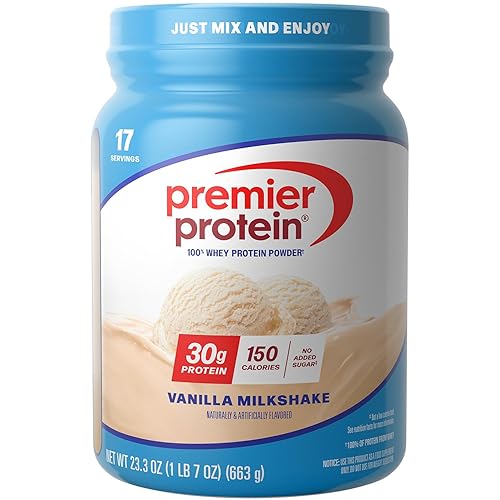
Premier Protein Powder, Vanilla Milkshake, 100% Whey, 1.46 lb
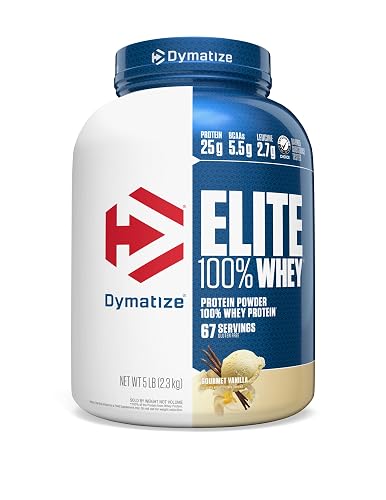
Dymatize Elite 100% Whey Protein Powder, Gourmet Vanilla, 5 lb
Frequently Asked Questions
Is whey protein good for building muscle?
Yes, with an important condition. The evidence consistently shows that adequate protein combined with resistance training builds and preserves muscle better than training alone, and whey is a high-quality, leucine-rich, convenient way to supply that protein. Without resistance training, protein alone does not build strength.
Is whey protein safe?
For healthy adults, it is generally well tolerated up to about 40 grams a day. The most common issues are digestive, such as gas and bloating. People with a milk allergy should avoid it, and those with kidney or liver conditions should check with a provider first.
How much whey protein should I take a day?
There is no universal number. Active people generally need more total protein than sedentary people, with the NIH citing roughly 1.2 to 2.0 grams per kilogram of body weight per day for athletes from all sources. Whey helps you reach that total. Most servings provide 20 to 30 grams of protein.
What's the difference between whey concentrate, isolate, and hydrolysate?
Concentrate is the least filtered and retains a little more fat and lactose. Isolate is filtered further for a higher protein percentage and less lactose. Hydrolysate is partially pre-digested for faster absorption and is usually the most expensive. The practical differences are smaller than the marketing implies.
Should I take whey if I already eat enough protein?
Probably not for extra muscle gains. Whey helps most when it fills a gap between the protein you need and the protein you actually eat. If you are already meeting your target from food, adding whey on top is unlikely to produce additional results.
Do I have to drink it right after a workout?
A post-workout shake is convenient and works well, but your total daily protein and consistent training matter more than exact timing. There is no need to stress over a narrow window.
In Summary
Whey protein is a high-quality, fast-digesting, leucine-rich milk protein, and it is the most popular protein supplement for good reason. The evidence supports a clear, useful role: combined with resistance training and an adequate diet, it can help build and preserve muscle, support recovery, and make hitting a daily protein target more manageable. A 2025 analysis in older adults found that protein plus resistance training meaningfully improved both strength and muscle mass over training alone.
What whey is not is a shortcut. It does not build muscle without the training to support it, it has not been shown to beat other high-quality proteins, and adding it on top of an already-sufficient diet does not buy extra results. Used sensibly, it is safe for most healthy adults up to about 40 grams a day, with mild digestive effects being the main downside. Choosing a third-party-tested product is the most practical way to avoid the real quality risks.
The practical takeaway: get most of your protein from whole foods, train with resistance work if muscle is your goal, and use whey to fill the gaps. That is the honest case for whey protein.
References
National Institutes of Health, Office of Dietary Supplements. Dietary Supplements for Exercise and Athletic Performance: Fact Sheet for Health Professionals. Accessed June 2026. View Source
Operation Supplement Safety (OPSS), U.S. Department of Defense / Uniformed Services University. Whey protein for performance. Posted May 2026. Accessed June 2026. View Source
Ma Y, Yan R, Li Y, et al. (2025). The impact of nutritional intervention and resistance training on muscle strength and mass in healthy older adults, a comparative analysis. Frontiers in Nutrition, 12, 1640858. View Source
Keep reading
More in Supplement →


Medical Disclaimer: This article is for informational purposes only and is not intended as medical advice. Always consult with a qualified healthcare provider before starting any supplement regimen. The studies referenced are for educational purposes and individual results may vary.